For a first trip, stay in Dublin and use the coast as a day-to-day routine rather than a day trip. The Irish Sea is swimmable year-round for the acclimatised: the Forty Foot in Sandycove, the Vico Baths above Killiney, and the long strand at Portmarnock all have regular winter dippers. Water sits around 14–16°C in August and 7–9°C in February, so most visitors are comfortable in July and early September, with May and June best for walking without heat or crowds.
Dublin Bay: the easiest coastal base
Book in Sandycove, Glasthule or Dalkey if you want to swim daily, and take the DART south from Connolly or Tara Street; Sandycove and Glasthule station is a couple of minutes from the Forty Foot. B&Bs and small guesthouses in those villages typically run €110–€180 a night in summer and drop sharply outside June–August. Hotels in Dún Laoghaire sit higher, around €150–€240. I would take a Glasthule guesthouse over a city-centre hotel: you will swim more, and the coast road south of Dalkey toward Killiney Hill is one of the best short walks in the country.
Howth, Malahide and the north side
Howth is the other obvious Dublin base and arguably better for walking. The Cliff Path Loop around the head is about 6km and takes two to two and a half hours at an easy pace, passing the Bailey Lighthouse and dropping to secluded beaches below the cliffs. The village itself has a small harbour beach and the Burrow Beach at Sutton nearby, a shallow strand that warms faster than the open sea. Trains from Connolly take about 25 minutes to Howth station, which is beside the harbour.
Accommodation in Howth is limited and expensive — expect roughly €160–€260 for the handful of small hotels and guesthouses, and book well ahead for summer weekends. Malahide, three stops further out, is cheaper and calmer, with a long estuary walk to the north beach and Malahide Castle demesne behind it. Skip Swords as a base: it is close to the airport but has no coast, and you will spend your budget on taxis. If you want one town in Ireland for swimming plus a good hill walk, I would book Howth for two nights and Dún Laoghaire for two more, rather than choosing between them.
Connemara and the west coast
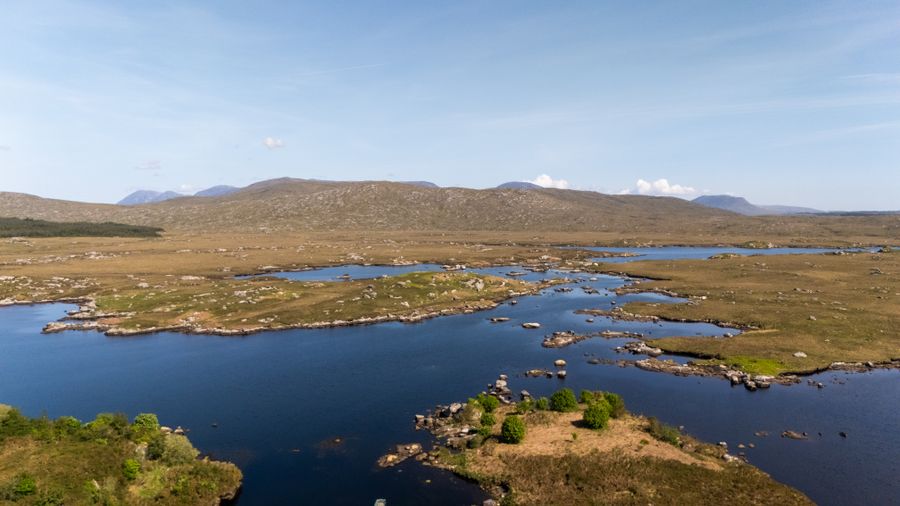
The strongest coastal walking in Ireland is in Connemara. From Clifden you can drive 15 minutes to Dog's Bay and Gurteen Bay near Roundstone — two adjoining crescent beaches with clear, cold water and shallow entry, good for anyone nervous about depth. The Sky Road loop out of Clifden is a 14km drive or a fine half-day walk with Atlantic views toward the Twelve Bens. Further north, the beach at Glassilaun near Letterfrack is a favourite for a morning swim, and the Diamond Hill walk in Connemara National Park takes about three hours up and back.
Clifden is the right base and has the widest choice: B&Bs from around €90–€140 a night, small hotels around €140–€220, with prices climbing in July and August. Roundstone is prettier but has very few rooms. The nearest railway station is Galway, about 80 minutes' drive from Clifden, so you need a car here; there is no practical bus to the beaches. Best months are May, June and September — August is busy and the water is not much warmer. Skip the temptation to base in Galway city and commute west daily; the drive is over an hour each way and you will miss the best swimming hours.
Donegal, Sligo and the northwest
Donegal has the most dramatic swim-and-walk combination in the country. From Dunfanaghy, the Tramore and Killahoey strands are walkable from the village, and the Ards Forest Park offers marked trails through pine to quiet coves. For a bigger day, the beach at Magheroarty and the cliffs at Horn Head are short drives away. Sligo is gentler: Strandhill has a surf school, a long beach and the climb of Knocknarea — roughly 40 minutes up — with the supposed grave of Queen Maeve at the top.
Base in Dunfanaghy for Donegal: guesthouses and small hotels run around €100–€170 a night in summer, and the village is compact enough to walk to the beach. Strandhill in Sligo is comparable at €90–€160, with good cafés and easy access from Sligo town, which has a railway station and bus links. Skip Bundoran if quiet matters — it is lively and family-heavy in July and August. The sea here is cold even in August, 14–15°C, and the weather turns fast; pack a windproof layer and check the tide before committing to any headland walk.